Every job below is one we do ourselves across Silver Spring.
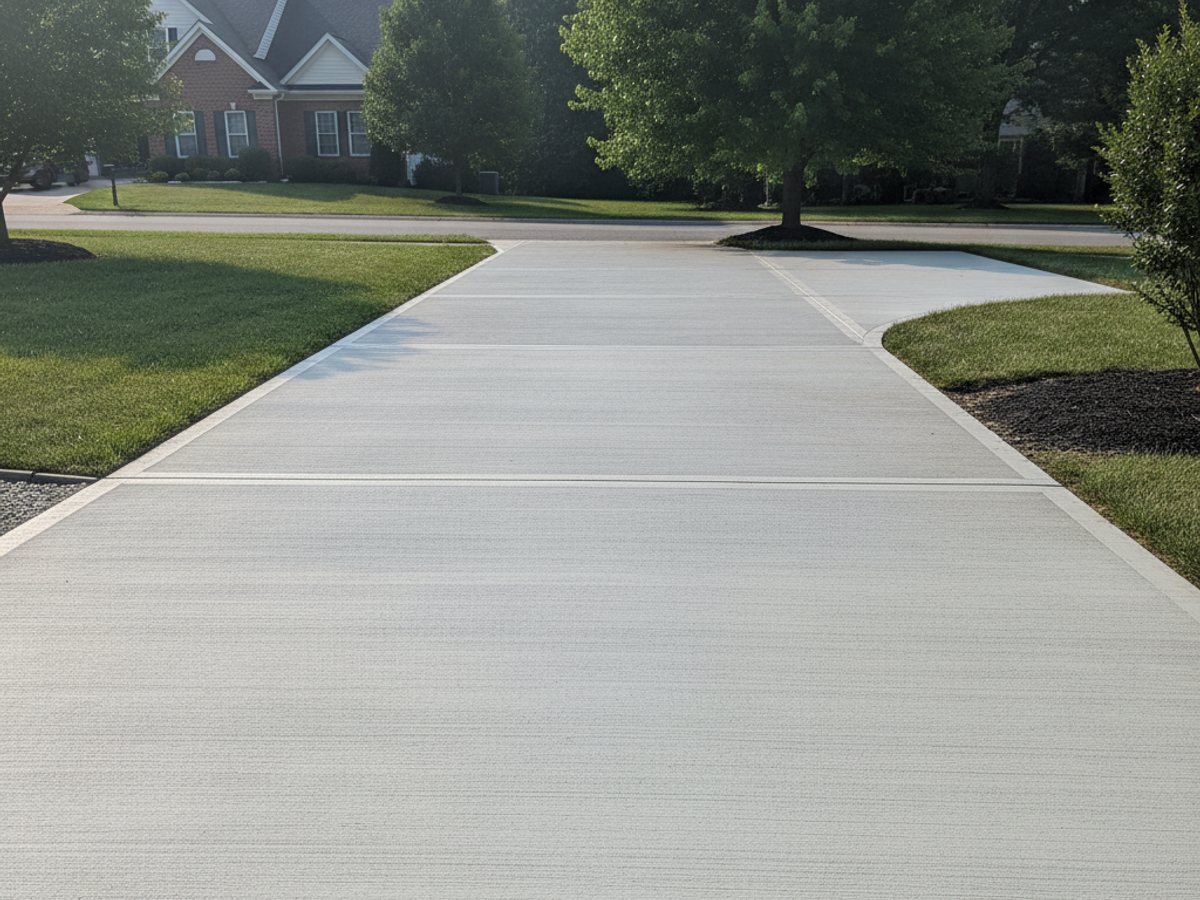
We pour driveways 4 to 6 inches thick depending on whether you're parking cars or a work truck on it, with rebar tied in for anything carrying real weight. We grade the base so water runs toward the street instead of pooling at your garage door. Expect to stay off the new concrete for about 3 days and keep vehicles off it for a full week while it cures.
A patio doesn't take the traffic a driveway does, so we can get away with a thinner pour, usually 4 inches over a compacted gravel base. We slope it away from the house at a quarter inch per foot minimum so water doesn't end up against your foundation. Broom finish, exposed aggregate or a light stamp, your call.
Stamped concrete gets you the look of flagstone, slate or brick without the joints where weeds and ants move in. We color it with an integral pigment or a color hardener depending on the look you want, then seal it to protect the pattern from salt and UV fading. It needs resealing every 2 to 3 years to keep the color from chalking out.
Walkways are usually the first thing to heave when clay soil around here freezes and thaws, mostly because they're often poured thin over a base that was never compacted right. We fix that by excavating down to solid ground and compacting a real gravel base before anything gets poured. Control joints go in every 4 to 5 feet so the slab doesn't crack in the middle of a panel.
Front steps need a rise and run that matches code, usually a 7-inch rise and 11-inch run, or they feel wrong every time someone uses them. We form and pour steps as one monolithic piece with the stoop where we can, so there's no seam to separate later. Handrail anchors get set before the pour, not drilled in after.
Not every crack means you need a new slab. If the crack isn't moving and the concrete underneath is still solid, we can saw-cut, patch and blend it so it holds for years. If a section has sunk or the base has washed out, that panel gets cut out and repoured instead of patched.
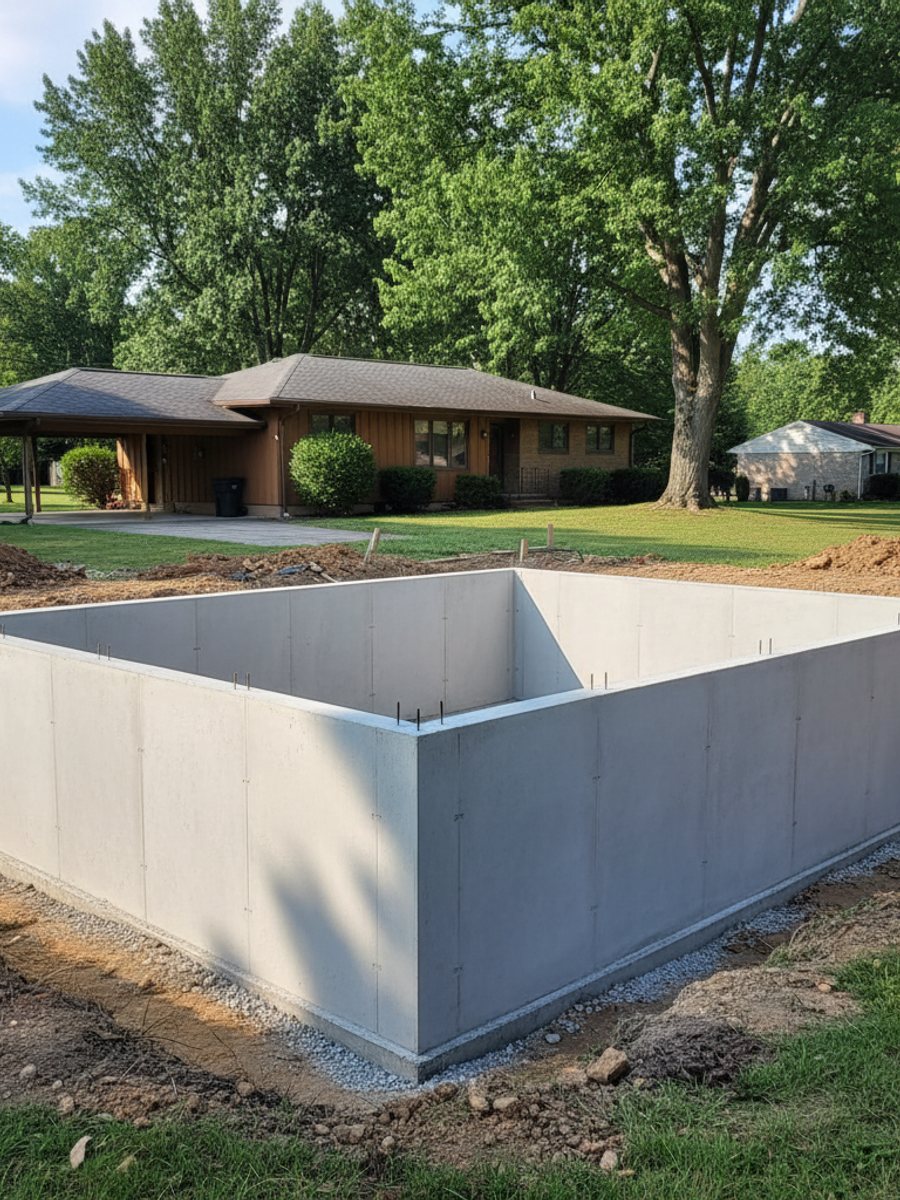
We pour slab foundations for additions, garages and sheds, sized and reinforced to whatever the structure above is going to carry. Vapor barrier goes down first if it's a living space, and we check the forms are square before any concrete hits the ground. Getting the thickness and rebar wrong here is the kind of mistake you don't find out about for years.
Sealer keeps water, salt and oil out of the concrete's pores, which is most of what causes spalling and pitting in the first place. We recommend it every 2 to 3 years on driveways that see winter salt, less often on patios. It's a cheap job compared to what a new driveway costs.
Concrete retaining walls hold back a slope so it stops eroding onto your patio or driveway. We build in drainage behind the wall, gravel backfill and weep holes, because a wall that traps water behind it is a wall that eventually leans or fails. Height and rebar spacing depend on how much soil it's holding back.
Garage floors take oil, gas and road salt dripping off your car all winter, so we finish them denser than a driveway pour and seal them before you park anything on it. We can pour a new floor or resurface an old one that's pitting and dusting.
Four steps, and no surprises in any of them.
You tell us what you want doing, we look at what is actually there, and we ask the awkward questions early.
In writing, itemised, free. If something might add cost later we flag it now rather than at the end.
Same crew throughout. We cover your floors, keep the dust down and tidy up before we leave each day.
You point out anything you are not happy with and we fix it before the invoice, not after.
Concrete work available throughout Silver Spring and nearby communities.
Questions that come up once a project is underway.
Describe the problem and we will tell you what it probably is. No obligation.