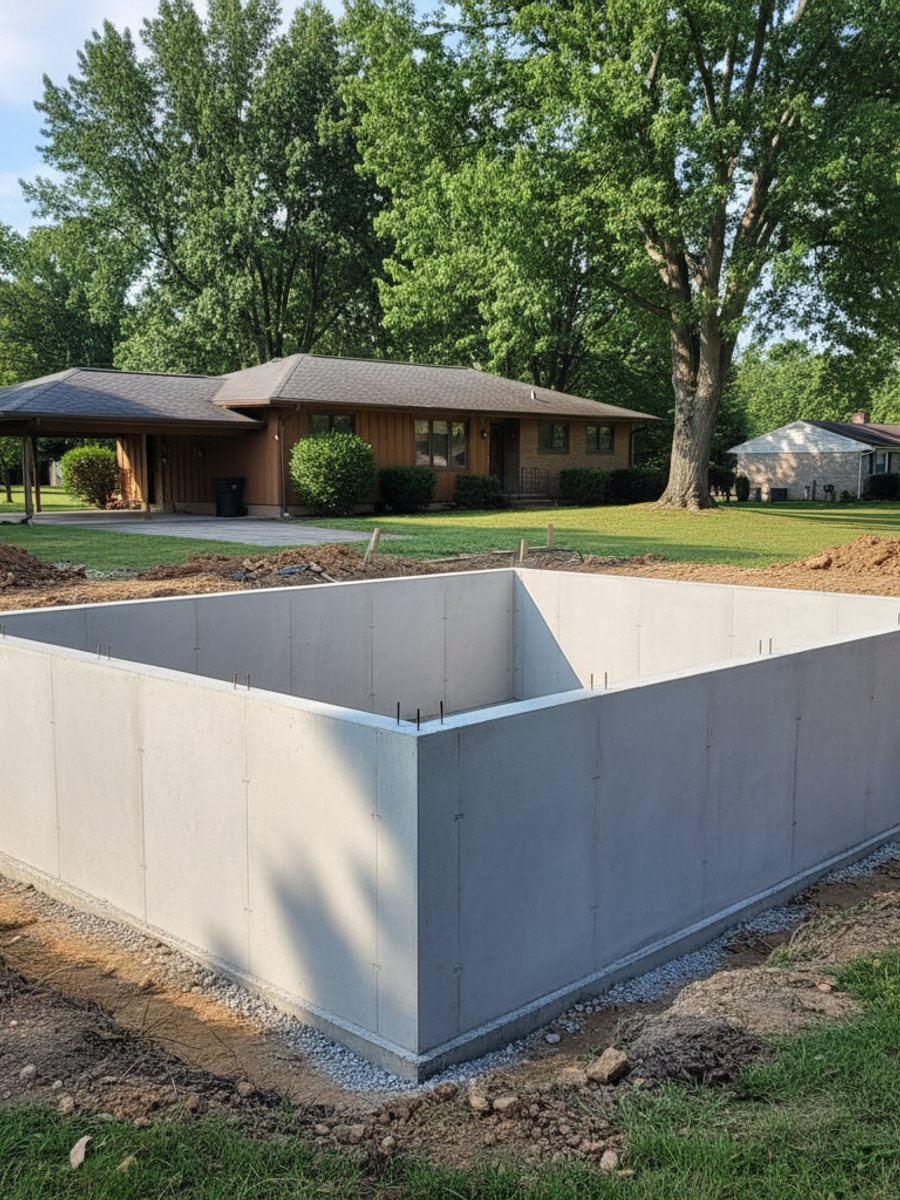
Concrete looks simple once it's down. A grey slab, flat, maybe broomed or stamped. What you don't see is the six inches of base underneath, the soil it's sitting on, and the decisions somebody made about drainage and reinforcement before the truck ever showed up. Get those wrong in Silver Spring and you'll know it in a year or two, usually in the form of a crack that runs straight across a patio or a driveway corner that's sunk an inch.
Here's what's worth checking before you sign anything.
1. What's actually under your yard
A lot of Montgomery County sits on clay-heavy soil, especially in the older parts of Silver Spring near Woodside and East Silver Spring. Clay holds water, then shrinks hard when it dries out in August. That movement under a slab is what causes heaving and cracking more than anything else. In some spots, especially up toward Forest Glen, you hit schist or weathered rock closer to the surface, which changes how deep you can dig for footings. A contractor who's worked your street before has usually already dealt with whatever's under it.
2. How thick the slab needs to be
A patio or walkway can get by on 4 inches of concrete over compacted gravel. A driveway that's going to carry a car, let alone a pickup or a trailer, wants 6 inches, and more at the apron where it meets the street. Thinner than that and you're relying on luck, not engineering.
3. Rebar or wire mesh, and where it sits
Wire mesh gets used because it's cheap and fast, but it has a habit of sinking to the bottom of the pour if nobody holds it up on chairs during placement. Rebar, usually #3 or #4 bar on a grid, does a better job of actually reinforcing the slab instead of just sitting in it. Ask which one is going in, and ask how it gets supported during the pour, not just whether it's included.
4. Where the water goes after it rains
Silver Spring gets real downpours, especially in spring and when the tail end of a tropical system comes through in late summer. A slab needs to slope away from the house, usually a quarter inch of fall per foot, or you're sending water straight at your foundation. On a lot with a flat backyard, which describes a lot of the postwar subdivisions out toward Fairland and White Oak, drainage has to be built into the grading before concrete goes down, not fixed after.
5. Control joints, and how soon they get cut
Concrete cracks. That's not a defect, it's physics, it shrinks as it cures. Control joints give it a place to crack where you won't see it, usually spaced every 8 to 10 feet on a driveway. They need to be cut within the first 24 hours after the pour, before the slab decides on its own where it wants to split. A crew that waits two or three days to saw-cut is gambling with your driveway.
6. Whether you need a permit
Montgomery County requires permits for a lot of concrete work that touches the structure of the house, like a new slab foundation or a retaining wall over a certain height, usually around 30 inches. A simple patio replacement often doesn't need one. A driveway that changes the curb cut or crosses the right-of-way usually does, and that can mean coordination with the county on top of the building permit. Your contractor should know which category your job falls into, and if they shrug when you ask, that's worth noticing.
7. Who's marking the utilities
Before any digging past a few inches, Miss Utility needs to come out and mark gas, electric, and water lines. It's free, it's required by law in Maryland, and it takes a few business days to schedule, so it needs to happen early, not the morning of the pour. Older streets in Silver Spring sometimes have utility lines that aren't exactly where the city map says they are, which is another reason not to skip this step.
8. HOA rules, if you've got one
Plenty of the newer developments around Silver Spring, and some of the older ones too, have an HOA with opinions about driveway color, patio materials, or how close a retaining wall can sit to a property line. Stamped concrete in a shade the HOA didn't approve is the kind of thing that gets you a letter and a redo. Check the covenants before you pick a finish, not after.
9. What the weather's going to do to the cure
Concrete needs time and the right temperature to cure properly. Pour in the middle of a July heat wave and the surface can dry faster than the inside, leading to surface cracking if nobody's managing it with curing compound or extra water. Pour too late in the season and an early frost, which can show up by late October some years, can damage a slab that hasn't had enough time to gain strength. Maryland winters bring somewhere in the range of 30 to 40 freeze-thaw cycles, and a slab that didn't cure right the first fall will show it by the second winter.
10. How long before you can actually use it
You can usually walk on a new slab after 24 to 48 hours. Driving on it is a different story, that generally wants 7 days minimum, longer if the weather's been cool. Full cure and full strength takes about 28 days. If a contractor tells you it's fine to park a car on it the next day, that's worth asking about twice.
None of this is complicated, but it's the kind of detail that separates a slab that lasts twenty years from one that's cracking by the second winter. If you want someone to walk your property and tell you straight what the soil and drainage are going to require before anything gets poured, that's the kind of conversation Top Notch Concrete has with homeowners around Silver Spring all the time.